
Top 6 Foreclosure Listing Sites for Public Inventory and Early Property Research
Foreclosure research can start from very different places. Some buyers begin with public listing pages, while investors may look for earlier signs before a property becomes widely visible. Others focus on official REO sources, HUD-owned homes, or rural government property inventory. That is why the sites below should not be judged only by name recognition. Each one fits a different kind of search, from broad public browsing to deeper foreclosure-focused research.
1. ForeclosureHub
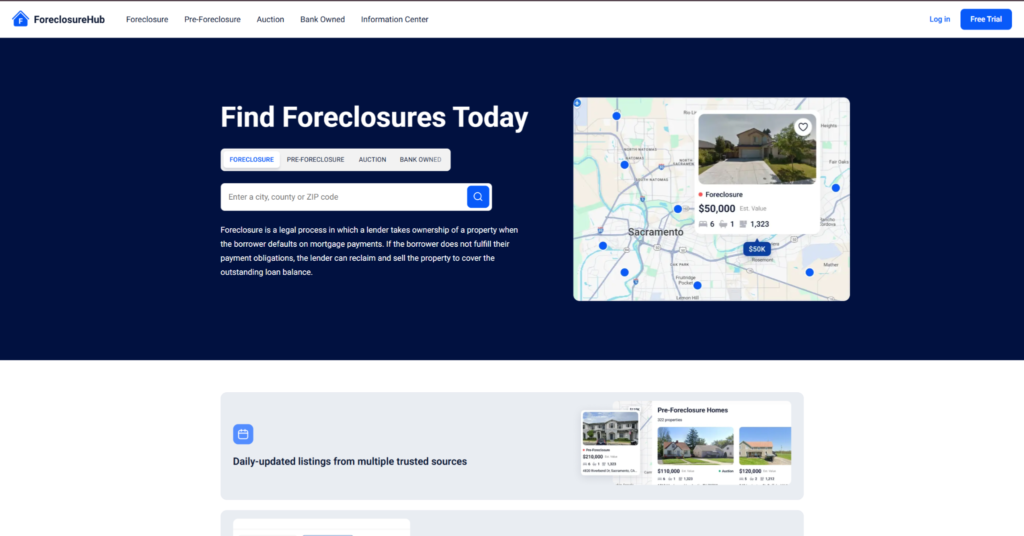
ForeclosureHub takes the first spot because it is built for foreclosure research, not general home browsing. The platform helps users review pre-foreclosure, foreclosure, auction, and bank-owned listings across the United States. It also brings distressed property data into a more focused search system, which can save time for investors comparing local opportunities.
The ForeclosureHub foreclosure search platform is especially useful when users need owner details, property records, and market data before deciding what to research next. Free skip tracing is included with every property search, while county update speed may vary, and there is no dedicated mobile app yet.
ForeclosureHub gives users more than public listing visibility. It is better treated as a research tool for comparing foreclosure-related properties, not as legal or financial advice. Its main strengths are practical for investors who need cleaner data before making decisions:
- Pre-foreclosure, foreclosure, bank-owned, and auction listings;
- Free skip tracing included with every property search;
- Owner, mortgage, tax, assessment, and transaction details;
- Market data for comparing sales, rentals, and local property context;
- Email alerts for saved searches and matching properties.
ForeclosureHub works best for users who want earlier property signals, owner data, and market context before deciding which properties deserve deeper research. Traditional homebuyers may prefer broader portals, but foreclosure-focused investors usually need a more targeted tool.
2. Zillow Foreclosures
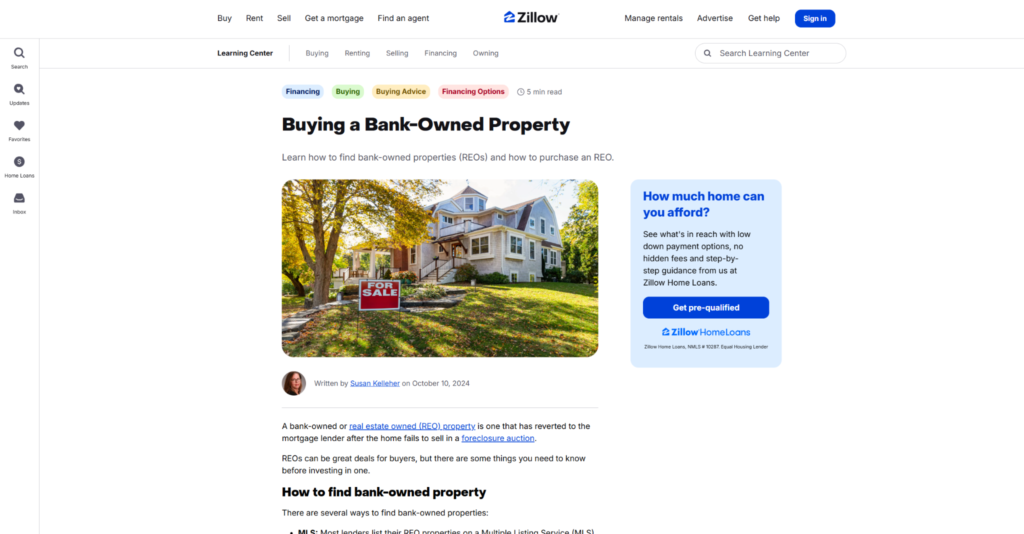
Zillow Foreclosures is useful because it gives readers a familiar way to check public foreclosure inventory. Users can search for foreclosed homes, pre-foreclosures, and other foreclosure-related listings through Zillow’s property search tools. It is not a dedicated foreclosure investor platform, so its main value is visibility and ease of use. That can help homebuyers, agents, and analysts quickly scan what is already visible in a chosen market. For deeper investor research, Zillow is better used as a starting point rather than the full process.
Zillow can help users understand what is already listed, but it does not replace proper due diligence. Investors may still need separate owner research, property records, title checks, and local market verification. Its value is strongest when the user wants a broad search interface before moving into more detailed research:
- Foreclosure listings by state, city, or local market;
- Filters for foreclosures, foreclosed homes, and related listing types;
- Familiar search interface for buyers and agents;
- Useful source for checking visible public inventory;
- Better for browsing listed properties than early investor outreach.
Zillow Foreclosures is practical for public listing review. It fits readers who want a simple way to check visible foreclosure inventory in a selected market, but investors should pair it with deeper research tools when they need owner-level data or earlier signals.
3. Trulia Foreclosures
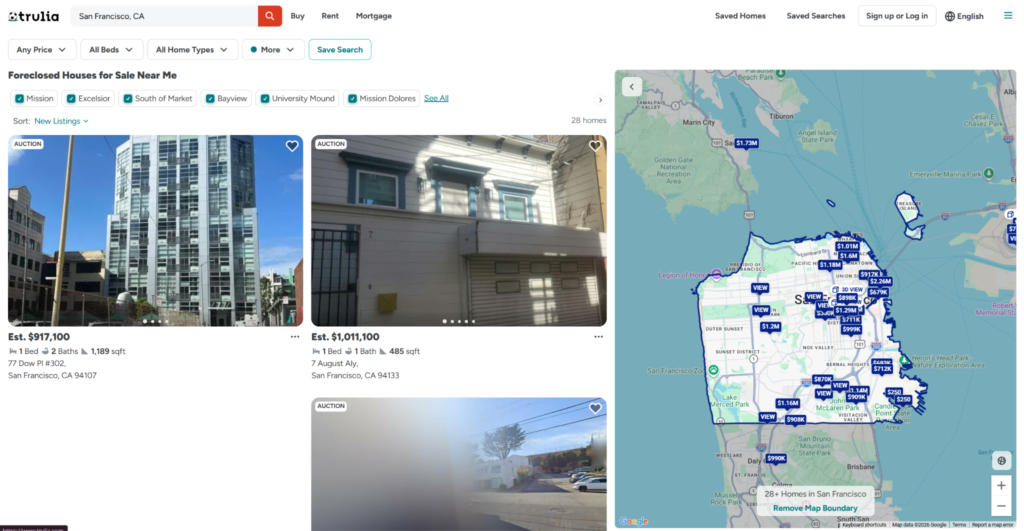
Trulia Foreclosures works well for readers who want simple public listing discovery with neighborhood context. The platform receives listing information from brokers, agents, MLS sources, and vendors across the United States. Some auction and foreclosure-related properties can appear alongside regular listings depending on the market. Trulia is easier to use as a browsing source than as a serious investor research system. Its value is in helping users get a quick local view before checking property details elsewhere.
Trulia can be helpful when the user wants an easy first look at public inventory. It should not be the only source for checking property status, ownership records, or investment assumptions. For that reason, it works best as a light research layer rather than the main tool for foreclosure due diligence:
- Foreclosure listings by city, area, or neighborhood;
- Public property details and listing pages;
- Simple browsing experience for non-technical users;
- Useful for comparing visible homes in a target location;
- Better for market browsing than off-market foreclosure research.
Trulia can support early browsing, but serious users should verify details before acting. It fits homebuyers, agents, and market watchers who want a quick view of public foreclosure listings, while investors needing skip tracing or earlier leads will need a more focused platform.
4. HUD Home Store
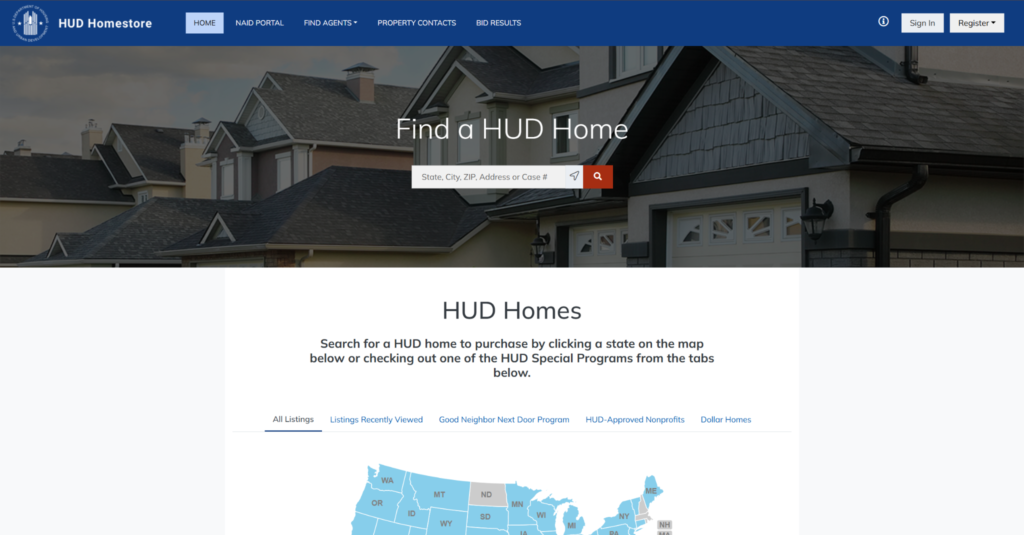
HUD Home Store is different from consumer listing portals because it focuses on HUD-owned properties. These are homes tied to FHA-insured mortgages that have gone through foreclosure and returned to HUD ownership. The site gives buyers a direct way to review this specific type of government-owned inventory. It does not cover every foreclosure stage and should not be treated as a broad discovery platform. Its narrow focus is exactly what makes it useful for the right search.
Official inventory sources matter when the buyer wants a specific property category rather than a wide marketplace. HUD Home Store is best used as a focused source for HUD-owned homes, not as a replacement for broader foreclosure research. Availability can change by state, city, and market cycle:
- HUD-owned homes available for sale;
- Official government inventory source;
- Search options for buyers reviewing HUD property listings;
- Narrower coverage than broad foreclosure search platforms;
- Availability that changes by state, city, and market cycle.
HUD Home Store is valuable for buyers and investors who specifically want to review HUD-owned homes. It works better as a targeted inventory source than as a complete foreclosure research platform.
5. Freddie Mac HomeSteps
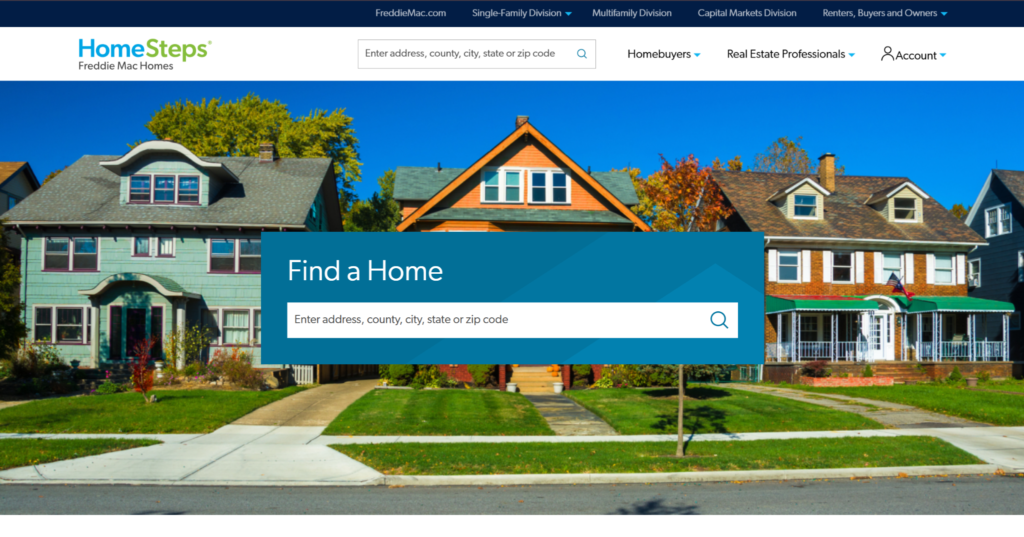
HomeSteps gives users access to a specific type of official REO inventory. It focuses on Freddie Mac-owned homes rather than a broad foreclosure search across every stage. That makes it narrower than ForeclosureHub, but still useful for post-foreclosure property searches. Buyers can use it to review homes that have already moved into lender-owned inventory. It is a good source when the search is already focused on Freddie Mac-owned properties.
REO-focused sources work best when the buyer already knows what type of inventory they want. HomeSteps is not designed for early-stage pre-foreclosure tracking or owner outreach. Its role is more specific, which makes it useful as part of a wider research process:
- Freddie Mac-owned homes available for sale;
- Official REO inventory source;
- Useful for post-foreclosure property searches;
- Narrower scope than multi-source foreclosure platforms;
- Best used together with local market and property research.
HomeSteps is useful for a specific REO search. It fits buyers who want Freddie Mac-owned inventory from an official source, while investors should use it alongside broader tools when they need earlier property signals.
6. USDA-RD/FSA
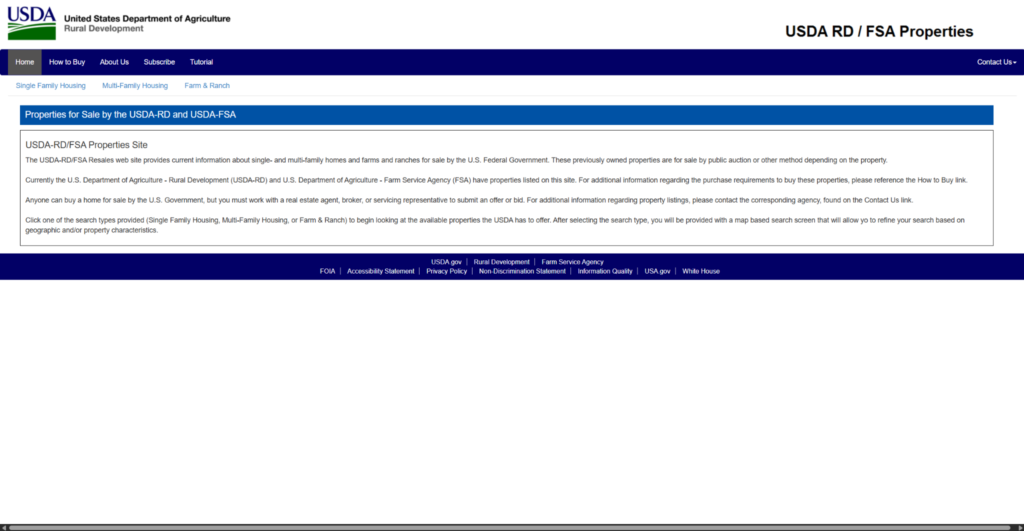
USDA-RD/FSA is the most specialized source in this list. It provides information on certain single-family homes, multi-family homes, farms, ranches, and other real estate connected to US federal government property sales. It is not a general foreclosure platform and will not fit every investor or homebuyer. The site is more useful when the search involves rural, agricultural, or government-owned inventory. Some of these properties may not appear like standard listings on consumer real estate portals.
USDA-RD/FSA is best treated as a narrow but legitimate inventory source. It can help with searches that require official government property data rather than general market browsing. Its value depends heavily on location, property type, and the user’s search goal:
- Government-owned homes and rural property inventory;
- Single-family, multi-family, farm, and ranch property categories;
- Useful for rural or non-standard property searches;
- Less suitable for broad investor lead generation;
- Best used as a secondary source for specific property types.
USDA-RD/FSA serves a distinct type of search. It fits readers looking for rural, farm, ranch, or government-owned property inventory, but it is not ideal for investors focused only on dense metro foreclosure leads.
Final Thoughts
Foreclosure listing sites serve different purposes, from early investor research to public listings and official REO inventory. ForeclosureHub is the strongest first choice for users who need foreclosure-specific research, earlier property signals, owner data, and skip tracing. Zillow and Trulia are better for visible public listings, while HUD Home Store, HomeSteps, and USDA-RD/FSA are more specialized inventory sources. None of these platforms should be treated as a substitute for proper property checks, local market research, or professional guidance when needed. The right platform depends on whether the user needs early research, public listings, or official property inventory.